2025年11月26日星期三

Research and Application of Composite Blowing Technology in Electric Arc Furnace Steelmaking


Research and Application of Composite Blowing Technology in Electric Arc Furnace Steelmaking

Date: December 29, 2016
Source: Municipal Science and Technology Committee

Awarded Project: Research and Application of Composite Blowing Technology in Electric Arc Furnace Steelmaking

Main Contributors: Zhu Rong, Liu Runzao, Li Lin, Wang Guanglian, Wen Desong, Feng Xiaoming, Chen Lie, Sun Qunbao, Dong Kai, Chen Sanya

Main Organizations:

  • University of Science and Technology Beijing

  • China Iron & Steel Research Institute Group Co., Ltd.

  • Tianjin Pipe Corporation

  • Laiwu Steel Co., Ltd.

  • Xinyu Steel Group Co., Ltd.

  • Xining Special Steel Co., Ltd.

  • Hengyang Hualing Steel Pipe Co., Ltd.

Recommended by: China Iron and Steel Association
Award Level: Second Prize of National Science and Technology Progress Award


1. Project Background

Problems such as long refining cycles, low energy utilization, unstable steel quality, and high production costs have long hindered the advancement of electric arc furnace (EAF) steelmaking technology. Domestically and internationally, methods such as ultra-high-power electricity supply and intensive chemical energy input are commonly used. However, these approaches do not fundamentally solve issues such as insufficient molten pool stirring and slow material and energy transfer. High-temperature gas disturbances inside the furnace lead to low oxygen utilization and excessive steel oxidation.

In 2002, the project team aimed to achieve high-efficiency, low-consumption, energy-saving, and high-quality EAF steelmaking. They proposed and developed a new generation of EAF steelmaking technology—“Composite Blowing Technology for EAF Steelmaking”. This technology integrates innovations such as cluster oxygen supply, synchronous long-life bottom-blowing stirring, and efficient waste heat recovery. Energy supply is optimized through a combination of electricity and various clustered oxygen injection methods (submerged, furnace wall, furnace top). Gas and powder mixtures strengthen molten pool stirring, while dynamic control balances energy supply and exhaust heat recovery. By 2011, the technology had completed innovative research and achieved industrial application.


2. Main Technical Content

  • Developed cluster jet oxygen supply technology for EAF steelmaking.

  • Created safe and long-life EAF bottom-blowing devices.

  • Established an intelligent energy balance system integrating electricity, oxygen supply, decarburization, and waste heat recovery.

  • Achieved intelligent composite blowing integration in EAF steelmaking.


3. Intellectual Property

  • 16 national invention patents granted

  • 10 utility model patents granted

  • 3 software copyrights registered

  • 1 industry standard established

  • 106 academic papers published (52 indexed by SCI/EI)

  • 1 monograph published


4. Technical and Economic Indicators & Promotion

After adopting this technology:

  • Average electricity consumption per ton of steel decreased by 13 kWh

  • Steel raw material consumption reduced by 15.5 kg

  • Waste heat recovered: 15.8 kgce

  • CO2 emission reduced by 46.3 kg

  • Cost reduced by 64.2 RMB per ton of steel

The technology has been applied to over 100 EAFs in more than 60 domestic and international steel enterprises, including Tianjin Pipe Corporation. Complete patented equipment sets have sold over 100 units, and spare parts sales exceed 20,000 units, covering over 30% of domestic EAF steel capacity. Relevant technology and products have been exported to Italy, Russia, South Korea, and other countries. Between 2013 and 2015, the project generated 615 million RMB in new sales and 610 million RMB in new profits. Annual electricity savings of 850 million kWh and CO2 emission reduction of 1 billion kg are achieved.

This project has significantly improved China’s EAF steelmaking processes and equipment manufacturing capabilities, promoting the development of high-end equipment manufacturing and advancing EAF technology.


5. Illustrations (Referenced Images)


Diagram of Composite Blowing Technology in EAF Steelmaking


Hot-state spraying effect of furnace wall cluster oxygen lance


Project R&D team discussion meeting


On-site EAF waste heat recovery system


Molten pool velocity distribution under different refining processes

Future Development of Electric Arc Furnace Steelmaking Technology in China

Electric Arc Furnace Steelmaking


Future Development of Electric Arc Furnace Steelmaking Technology in China


By Ni Bing

In recent years, the global crude steel annual output has ranged between 1.6 billion and 1.8 billion tons, of which electric furnace steel accounts for over 400 million tons, approximately 25%. Outside China, the share of electric furnace steel in the global steel industry has exceeded 40%. The United States has the highest proportion among developed countries, reaching 67%. In 2020, China produced 1.065 billion tons of crude steel, of which electric furnace crude steel accounted for approximately 96 million tons, or about 9%, indicating significant room for growth. By the end of 2020, China had around 420 electric furnaces of 30 tons or above, with a total capacity of 182.25 million tons.

Compared with the long process (integrated steelmaking), the short-process electric furnace emits only 25% of CO2, generates 1/30 of solid waste, and consumes roughly 50% of energy, showing clear advantages. The short process also offers benefits such as immediate start-stop operation, high production flexibility, and the ability to utilize urban waste. With the gradual release of scrap steel resources in China, electric furnaces have enormous development potential over the next 10–15 years. The government encourages steelmaking from scrap and the short process, supports capacity replacement without adding new production, and promotes relocating high-environmental-pressure or overcapacity production to areas rich in scrap steel and lacking steel supply.

As global steel output increases, electric furnace steel production is rising annually. Outside China, electric furnace steel already accounts for over 40% of global steel production, while China still has substantial growth potential. Future electric furnaces should focus on models that meet requirements such as high efficiency, energy saving, continuous charging, scrap preheating, environmental protection, and waste heat recovery. Furnace selection should align with metallurgical process requirements for sustainable development. Development should also emphasize energy-efficient and low-cost production, green key technologies, intelligent manufacturing, and high-value specialty steel metallurgy.


Electric Arc Furnace Steelmaking Technology

Focusing on goals of high efficiency, simple functionality, environmental friendliness, intelligent control, and diverse raw materials, electric arc furnace (EAF) technology continues to advance. High-efficiency steelmaking aims to minimize refining cycle and arc-on time while reducing power consumption. Work should focus on six aspects:

  1. Increasing input power per ton of steel through larger and higher-power equipment.

  2. Enhancing chemical heat from element oxidation in steel and from oxygen lances.

  3. Utilizing sensible heat from preheated scrap.

  4. Improving electrical efficiency and power factor through optimized power supply, smart EAFs, and short-mesh structures.

  5. Reducing downtime, including charging, electrode connection, tapping, and furnace maintenance times.

  6. Producing single-grade steel in production lines, which is more efficient than multi-grade production.

Advanced furnace types enable full scrap preheating, continuous charging, lidless operation, flat molten pools, low noise, minimal dust, trace dioxins, and dust recovery. EAF technology has evolved from conventional open-lid furnaces to Fuchs (vertical preheating), Consteel (horizontal continuous charging), Quantum, Ecoarc, Sharc, CISDI-Green, and CERI-s1-Arc furnaces.

Conventional open-lid furnaces are reliable but inefficient in achieving the above goals. In the 1990s, Fuchs and Consteel furnaces were introduced to China. Fuchs furnaces were largely phased out due to high failure rates and cost issues. Consteel furnaces gained popularity for efficiency, low cost, and reliability. By 2017, 95% of EAFs were open-lid; since 2017, over 85% of newly installed furnaces adopted continuous horizontal charging. Consteel furnaces still face issues: preheating temperatures only reach 200–300°C (design 400–600°C), dioxin formation in exhaust gases, and high “wild air” intake affecting dust removal and waste heat recovery.

Quantum, Ecoarc, and Sharc furnaces address these issues through vertical preheating. Quantum uses lifting trolleys instead of baskets, siphon tapping, and maintains high preheating with minimal harmful gases. Ecoarc integrates a sealed vertical preheating system, achieving 800°C scrap preheating and dioxin emissions <0.1 ng-TEQ/m³. Sharc, a DC furnace, also uses dual vertical shafts to preheat scrap, achieving similarly low emissions. Globally, these furnaces are limited in number, with their effectiveness still being evaluated.

Currently, domestic EAF capacity is 85% local and 15% imported. While small furnaces (<100 tons) are largely domestically produced, China is developing proprietary integrated EAF systems, combining horizontal and vertical advantages. CISDI-Green and CERI-s1-Arc furnaces demonstrate innovations such as stepped continuous scrap feeding, dioxin reduction, and waste heat utilization, though still at a promotional stage. Future furnace development will focus on continuous charging, scrap preheating, environmental protection, low dioxin emissions, waste heat recovery, and intelligent steelmaking.


Key Production Metrics

With advanced technologies, domestic EAFs under full scrap conditions can achieve 30-minute refining cycles, metal yield of 90–92%, power consumption below 300 kWh/ton, electrode consumption below 1.0 kg/ton, and annual nominal capacity exceeding 10,000 tons per ton of furnace.

Current EAF steel costs are 500–600 RMB/ton higher than long-process steel, mainly due to raw materials, power, electrodes, and refractory consumption. Cost reduction relies on optimizing these factors. Expanding scrap imports and reducing iron ore dependence is a practical approach.

Other cost management strategies include:

  • Minimizing raw material costs through scrap classification and using diverse iron-rich materials.

  • Reducing energy consumption via optimized power supply, preheating, and continuous charging.

  • Maximizing off-peak electricity benefits, automation, and minimizing downtime.


Future Technical Directions

Focusing on efficiency, low consumption, green and intelligent technology, steel enterprises should select suitable furnace types and production technologies. Unlike converters using liquid iron, EAFs use solid scrap, making control more challenging. Future directions include:

  • Short-process high-efficiency, low-cost, low-energy production.

  • Green key process technologies, including flue gas heat recovery, furnace insulation, low-value wastewater heat utilization, dioxin control, zinc-containing dust utilization, and slag modification.

  • Intelligent manufacturing: scrap and furnace charge control, smart electrode adjustment, multi-functional robots, molten pool temperature monitoring, foam slag detection, liquid level monitoring, gas analysis, endpoint control, and one-button or fully automated EAF operation.

  • High-value specialty steel metallurgy.

Currently, China’s high-end specialty steel accounts for less than 5%, while Europe, the US, and Japan exceed 20%, with Sweden up to 60%. High-end steels are mostly EAF-produced. As the industry shifts from quantity to quality, material upgrading is urgent, and demand for high-end specialty steels is expected to grow rapidly.

(Author: Professor-level Senior Engineer, Steel Research Institute, China)

2025年11月25日星期二

Process Measures for Improving the Quality of Refractory Castables Used in Electric Furnace Steelmaking

Electric Furnace Steelmaking


Process Measures for Improving the Quality of Refractory Castables Used in Electric Furnace Steelmaking

Electric furnace steelmaking uses electrical energy as the heat source. The furnace roof was originally built with silica bricks. In the late 1960s, high-alumina materials began to be tested, which offered better refractoriness, high-temperature corrosion resistance, and thermal shock resistance than silica bricks; thus, they were widely used in steel plants for many years. After the 1990s, fully water-cooled furnace-roof technology became widely adopted. To reduce furnace downtime and labor intensity, monolithic refractory castables—typically high-alumina or corundum castables reinforced with steel fibers—were commonly used in the electrode-triangle area.

To improve the quality of the castables, the following technological measures can be implemented:

  1. Use high-purity raw materials with fewer impurities and good high-temperature volume stability, which helps enhance the high-temperature volume stability and corrosion resistance of the castables.

  2. Minimize the CaO content, meaning reducing the amount of cement used, since an increase in CaO content significantly increases the amount of liquid phase, which is detrimental to the high-temperature performance of the castables.

  3. Add an appropriate amount of α-Al₂O₃ to increase the material’s medium-temperature strength. α-Al₂O₃ can react with CaO to form CA and CA₂, resulting in a certain degree of volume expansion. This expansion helps compensate for the volume shrinkage caused by dehydration and phase transformation of the castables.

  4. Add a suitable amount of soft clay as a sintering agent to promote liquid-phase formation and sintering, in order to achieve ceramic bonding.

  5. Add an appropriate amount of an expansion agent (kyanite). The volume expansion generated during the mullitization of kyanite helps offset the volume shrinkage occurring during the sintering process.

  6. Introduce heat-resistant stainless-steel fibers to improve thermal shock resistance and enhance material toughness, thereby reducing structural spalling and damage of the castables.

  7. Add an appropriate amount of anti-explosion agent to allow water vapor within the castables to escape smoothly during baking, thereby improving the baking quality of the castables.


2025年11月24日星期一

Technology for Producing Mineral Wool from Blast Furnace Slag


Mineral Wool

Technology for Producing Mineral Wool from Blast Furnace Slag

Blast furnace slag is a by-product generated during the ironmaking process, and its output is substantial. Using blast furnace slag to produce mineral wool products not only makes full use of this resource but also reduces environmental pollution caused by slag, effectively turning waste into value. The production process of mineral wool mainly consists of four stages: melting, fiberization, fiber collection, and forming. According to the different melting processes, the technology can be divided into the cupola method and the direct production method using blast furnace molten slag. The difference between the two lies in the raw materials and the melting equipment used.

Cupola Method

The cupola method uses cold blast furnace slag as the main raw material, with coke as the fuel. A suitable amount of modifiers (such as limestone or fly ash) is added and melted in the cupola for conditioning. However, this method has several drawbacks:

  • Large amounts of flue gas and dust are generated during production, leading to environmental pollution.

  • Since cold slag is used as feedstock, additional fuel is required for remelting. Producing 1 ton of mineral wool consumes approximately 400 kg of coke, increasing both energy consumption and production costs.

  • The resulting mineral wool tends to have a high shot content, coarse fiber diameter, and poor hand feel.

Direct Production Method Using Molten Blast Furnace Slag

In this method, molten blast furnace slag is used as the primary raw material. Liquid slag from the blast furnace is introduced into a heating and conditioning furnace, where modifiers are added. Temperature and composition adjustments are achieved using electrodes or gas burners. The conditioned melt is then transformed into mineral wool fibers through a fiber-forming system, followed by fiber collection and post-processing to produce mineral wool products with various properties and applications.

Comparison Between the Two Processes

Compared with the cupola method, the direct production method with molten slag can recover more than 80% of the slag’s sensible heat. Its energy consumption is less than 30% of the cupola method, and production costs are only 60–80% of those in the cupola process, giving it strong market competitiveness. At present, the main technologies developed domestically and internationally for the direct production of mineral wool from molten blast furnace slag include:

  • JFE’s blast furnace slag mineral wool production technology,

  • Dalian Environmental Protection Design Institute’s “one-step” mineral wool production process,

  • Hebei University of Science and Technology’s direct fiber-forming technology.

Economic and Environmental Benefits

For steel enterprises, blast furnace slag is mostly used for cement production, which has low added value. Using blast furnace slag—particularly molten slag—to produce mineral wool offers a new path for expanding non-steel industries and increasing profitability. Currently, the market price of mineral wool ranges from 2,500 RMB per ton to over 10,000 RMB per ton. Additionally, the process allows full recovery of the sensible heat in molten slag, offering significant environmental benefits. Therefore, from economic, environmental, and social perspectives, producing mineral wool from blast furnace slag is a highly promising, high-value-added utilization model.

New Start-Up Processes for Submerged Arc Furnaces

Submerged Arc Furnaces


New Start-Up Processes for Submerged Arc Furnaces

Submerged arc furnaces must be restarted after major or medium-scale repairs. Before the 1980s and 1990s, the start-up methods used for these furnaces largely followed traditional practices, which were characterized by long start-up cycles, high consumption, and heavy manual labor. In recent years, in order to reduce start-up costs, ferroalloy researchers and engineers in China and abroad have conducted extensive research and practical innovation to develop new furnace start-up processes based on traditional methods.

The main objectives of starting up a ferroalloy electric furnace are to bake the furnace lining, remove gases, and sinter and consolidate the lining; additionally, the electrodes must be baked to ensure that both the furnace and electrodes meet the required metallurgical conditions before charging materials.

Traditional Start-Up Methods

1. Start-Up Process for Newly Built Furnaces or Furnaces After Major Overhauls

Build a checker wall (or iron barrier) → wood drying → coke baking → electric baking → charging.

2. Start-Up Process After Long-Term Shutdown

Dig out the old burden, repair the furnace lining → build a checker wall (or iron barrier) → wood drying, coke baking → electric baking → charging.
These traditional methods require a long time, consume large amounts of materials, incur high costs, and impose high labor intensity. Based on practical experience, several improved “new start-up processes” have been summarized.


New Start-Up Processes

1. Direct Electric Baking of Electrodes

The electrodes are placed directly on the furnace bottom, and conductive materials such as coke are packed around them to a height of 0.5–1 times the electrode diameter, slightly higher between the electrodes. After power is supplied, a circuit (mainly a delta connection) is formed between the electrodes, with coke serving as the conductive medium. In practice, several scenarios have been encountered:

  1. Pre-baking with Coke:
    Approximately one-third of the baking length is achieved using coke, followed by continued electric baking.

  2. Retaining hard electrode tips after major furnace overhaul:
    Each electrode retains about 0.5 m of hard tip.

  3. No hard electrode tips remaining:
    The electrode ends are completely sealed with welded steel plates, refilled entirely with electrode paste, and then directly baked electrically.

After power is supplied, an appropriate power-supply regime is adopted to bake the electrodes while gradually heating the furnace lining.

2. Direct Electric Heating of the Furnace

For furnaces stopped without burden removal (or after burden removal but keeping the old electrode tips intact during medium/major repairs), low-load power can be supplied initially to directly heat the furnace for start-up.


Theoretical Basis of the New Start-Up Processes

When retaining old electrode tips and starting the furnace through direct electric heating, the primary concern is preventing hard electrode breakage after power application. Smooth temperature transition—from room temperature to the high temperatures required for smelting—is critical to start-up success.

In self-baking electrodes, internal stresses arise from uneven temperature distribution, load conditions, and microstructural differences. When internal stresses exceed the ultimate strength, cracks develop. Frequent or sudden temperature fluctuations cause cracks to merge and grow, leading to catastrophic electrode breakage.

Studies on the effects of electrode current fluctuations on thermal stress (see Fig. 1) show that thermal stress increases with the number of cyclic current variations. Surface stresses are 1.6 times higher than stresses at the electrode center. According to the mechanisms of thermal stress generation and distribution, reducing the rate of change in electrode current can prevent crack initiation and propagation within the electrode.

Measures to prevent electrode breakage include:

  • Reduce the current gradually before shutdown; never shut down directly from full load.

  • Increasing furnace load slowly when re-energizing;

  • Ensuring that load increases as continuously as possible within the transformer’s tap-changing limits to minimize the current variation rate.

These measures help prevent thermal shock and hard electrode breakage during start-up.


Production Process of Fused Magnesia and Technical Measures

Fused Magnesia

Production Process of Fused Magnesia and Its Main Technical Measures

With the rapid development of the steel industry, the requirements for the quality and performance of refractory materials have become increasingly demanding. High-performance magnesia-carbon bricks have been widely used in industrial production, and fused magnesia has developed rapidly along with advancements in magnesia-carbon brick manufacturing technology. Magnesia obtained through electric fusion features large crystal sizes, high purity, and high density, making it suitable for producing premium magnesia-carbon bricks. 

Fused magnesia offers advantages such as high purity, large crystalline grains, dense structure, strong slag resistance, and excellent thermal shock stability. Its primary crystal phase is periclase, characterized by coarse grains in direct contact. 

As such, fused magnesia is widely used in the production of high-grade magnesia bricks, magnesia-carbon bricks, and various monolithic refractories. It can also be used as a high-temperature electrical insulation material in electrical components.

Production Process of Fused Magnesia

In industrial practice, raw materials vary depending on the grade of fused magnesia being produced. Ordinary fused magnesia typically uses natural magnesite as the raw material, whereas large-crystal fused magnesia uses lightly calcined magnesia. The equipment used is a buried-electrode arc furnace, usually operating with three regenerated or non-regenerated graphite electrodes. The basic process includes: charging → igniting and raising the electrodes → gradual feeding → smelting (magnesite sinters and melts under the heat generated by high electric current) → natural cooling → crushing, grading, and manual sorting → storage. The electric fusion temperature for fused magnesia is above 2750°C.

Current Status of Fused Magnesia Production

The production of fused magnesia consumes a large amount of electrical energy. The comprehensive energy consumption per unit product is nearly 5–10 times that of similarly sintered magnesia, making it a restricted industry under China’s energy policies. At present, the overall smelting level of fused magnesia in China remains relatively low. Equipment is simple, operations are largely manual, thermal regimes and operating procedures are inadequate, and significant energy waste and environmental pollution persist. Therefore, it is urgent to upgrade the industry strategically. Conducting analytical research on the thermal processes and energy balance of fused magnesia production, and identifying effective measures for energy conservation, improving raw material utilization, and controlling dust emissions, is highly necessary.

Main Technical Measures

  1. Research and development of integrated energy-saving technologies:

    • Increase electric furnace power, gradually phasing out low-power furnaces and adopting furnaces of 1600 kVA or higher, including 3500 kVA or even 5000 kVA.

    • Develop new energy-efficient furnaces with intelligent control systems to achieve optimal power usage.

    • Optimize and improve production processes and operational parameters.

  2. Dust control and waste heat recovery.

  3. Development and production of new types of fused synthetic aggregates.


Main Types of Steel-Making Electric Furnaces and Smelting Processes

Steel-Making Electric Furnaces

Main Types of Steel-Making Electric Furnaces and Smelting Processes

In a broad sense, the types of steel-making electric furnaces include electric arc furnaces (EAF), induction furnaces, electroslag furnaces, electron-beam furnaces, and others. “Electric-furnace steel” generally refers to steel produced in basic electric arc furnaces, so this article focuses on electric arc furnaces (EAF). 

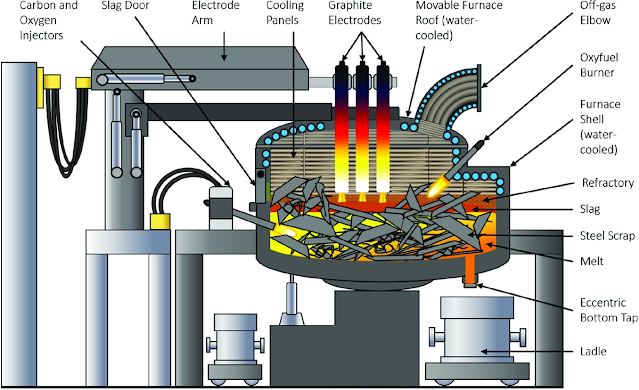
EAFs are divided into direct-current electric arc furnaces (DC-EAF) and alternating-current electric arc furnaces (AC-EAF). Because DC-EAFs can reduce the consumption of refractory materials, save energy, reduce noise, and cut flicker by half, their application has been increasing rapidly. Technologies such as eccentric bottom tapping, water-cooled furnace walls, water-cooled furnace roofs, oxy-fuel burners, and scrap preheating are well-suited for DC-EAFs and yield excellent results. 

The 1990s marked a period of rapid development for DC-EAFs. In industrialised countries with high scrap recycling rates (such as the United States, Japan, and South Korea) and in developing countries with limited power supply (such as China and Southeast Asian nations), more than 100 EAFs with capacities over 50 t were built within only a few years. Representative examples include Japan's 240 t DC-EAF and the United States’ 280 t DC-EAF.

DC-EAFs use a single graphite electrode at the furnace roof, producing a stable and concentrated arc that promotes good molten-bath stirring and uniform temperature distribution, thus improving melting efficiency. A defining feature of DC-EAFs is that the roof graphite electrode serves as the cathode, while the anode is connected to the furnace bottom. This requires the furnace bottom to be electrically conductive. 

The main conductive materials used for DC-EAF furnace bottoms include:
(1) Conductive refractories (ABB), and
(2) Metallic elements such as steel-bar electrodes (Irsid-Clecim), steel-plate electrodes (VAI), multiple steel-pin electrodes (GHH), and copper–steel composite water-cooled bottom electrodes.


Aside from the special requirements for furnace-bottom refractories in DC-EAFs, the refractories used in other furnace areas are largely similar.

Among AC-EAFs, the ultra-high-power electric arc furnace (UHP-EAF) is widely used. UHP furnaces offer high productivity, slow furnace-wall wear, shorter melting times, improved thermal efficiency, lower power consumption, and stable arcs. As a result, UHP-EAFs gained widespread adoption in the late 1970s. 

In recent years, UHP technology has been developing toward larger capacities and higher power ratings. Some foreign UHP-EAFs have reached power levels of 1000 kVA/t or even higher, earning the designation of ultra-high-power arc furnaces. To maximise the advantages of UHP operation, several matching technologies have been developed, including water-cooled furnace walls, water-cooled roofs, and long-arc foamy-slag smelting. 

In Europe, all EAFs above 30 t are equipped with water-cooled slag-retaining furnace walls and water-cooled roofs. More than 70% of Japanese EAFs use water-cooled furnace walls, and Western Europe and the United States have also adopted water-cooled slag-retaining walls. 

The use of water-cooled walls can extend furnace-wall life to over 2,000 heats, reduce refractory consumption by more than 60%, increase productivity by 8–10%, reduce electrode consumption by 0.5 kg/t, and cut production costs by 5–10%. With water-cooled furnace roofs, roof life can reach up to 4,000 operations.

Electric arc furnaces can be classified by tapping method into spout-type tapping EAFs and eccentric bottom tapping EAFs (EBT), as shown in Figure 1. The EBT design enables a larger water-cooled area, lower refractory costs, and reduced slag carryover into the ladle, thereby increasing its adoption.

Electric-furnace steelmaking mainly uses scrap steel, metallised pellets, and similar materials. With arc temperatures reaching up to 4000 °C in the arc zone, a series of metallurgical and chemical reactions convert scrap into new steel, as illustrated in Figure 2. The smelting process typically involves three stages: melting, oxidation, and reduction. The furnace atmosphere can be adjusted to either oxidising or reducing conditions, enabling high efficiencies of dephosphorization and desulfurization.

In China, EAF steelmaking is mainly used for producing high-quality alloy steels. In recent years, with continuous innovations in EAF processes—including higher operating temperatures, larger furnace capacities, greater thermal shock intensity, and increasing quality requirements for alloy steels—refractory materials face higher performance demands.


2025年11月21日星期五

Spain Unveils €2 Billion New Energy Investment Plan, Focusing on Solar, Hydrogen, and Energy Storage


Spain Unveils €2 Billion New Energy Investment Plan, Focusing on Solar, Hydrogen, and Energy Storage

Source: TaiyangNews

Spain’s Ministry for Ecological Transition and Demographic Challenge (MITECO) recently announced a new funding plan of approximately €2 billion aimed at strengthening the national industrial value chain and accelerating the energy transition. The plan was unveiled by Spain’s Vice President and MITECO Minister, Sara Aagesen, and focuses on four key areas: industrial value chains, renewable energy integration, electric mobility, and innovative thermal solutions for industrial and residential sectors.

The projects benefiting from this plan will receive extended implementation periods, beyond the previous deadline of August 31, 2026, under Spain’s Recovery, Transformation, and Resilience Plan (RTRF). This new funding package aligns with the European Clean Industrial State Aid Framework, which allows aid allocation until December 31, 2028, and permits disbursement even beyond that date.

Previously, Spain allocated nearly €300 million to 33 value chain projects across 12 autonomous regions, covering solar photovoltaic (PV), wind, heat pumps, electrolysers, and related components, including SUNWAFE’s silicon ingot and wafer manufacturing project. Under the new funding plan, MITECO will provide €300–350 million for manufacturing these components, as well as for industrial technologies related to energy efficiency, grids, and electric arc furnaces. An additional €200 million will be allocated to upgrade port infrastructure to support offshore wind and other renewable technologies, while €300–450 million will be specifically earmarked for renewable hydrogen projects.

In terms of renewable energy integration, the government will launch wind-focused project calls aligned with the National Enhanced Power Supply Roadmap, promoting hybrid development with energy storage, with a budget of €300–350 million. Another €100 million is dedicated to pumped-storage hydropower plants to support storage development. Additionally, new proposals will be solicited for innovative renewable energy and storage integration, including agrivoltaics and floating PV, with a budget of €150–200 million.

Notably, Spain recently issued a Royal Decree aimed at boosting domestic energy storage development, targeting 22.5 GW of storage capacity by 2030.


Fangda Carbon Awarded 2025 Global Graphite Electrode Excellence Brand

Graphite Electrode


Fangda Carbon Awarded 2025 Global Graphite Electrode Excellence Brand


On November 13, the 16th International Needle Coke and Carbon Materials Industry Upgrade Summit Forum successfully concluded in Shanghai. Fangda Carbon (6.100, -0.68, -10.03%) stood out among global competitors and was awarded the “2025 Global Graphite Electrode Excellence Brand” in recognition of its technological innovation, market leadership, and industrial chain integration capabilities in the graphite electrode sector. This award highlights Fangda Carbon’s benchmark status in the global carbon materials industry and its outstanding contributions to driving industry upgrades and supporting the development of strategic emerging industries in China.

As a leading domestic enterprise in the graphite electrode field, Fangda Carbon consistently upholds technological innovation as its core driving force (9.540, -0.19, -1.95%). Facing the dual opportunities of the rapid development of the new energy industry and the transformation and upgrading of the steel sector, the company has focused on high-end product R&D, successfully overcoming multiple key technical bottlenecks in the industry. Its independently developed ultra-large high-performance graphite electrode technology has effectively improved conductivity, high-temperature resistance, and service life, and has been widely applied in electric arc furnace steelmaking, industrial silicon, yellow phosphorus, and other metal or non-metal smelting fields, providing high-quality solutions for the steel and other metallurgical industries.

As a participant in this year’s forum, Fangda Carbon actively engaged in discussions on topics such as high-end needle coke production processes and the circular economy of carbon materials, fostering deep dialogue with upstream and downstream enterprises across the industrial chain. Through strategic cooperation with needle coke producers and anode material R&D institutions, the company has promoted a collaborative innovation mechanism from raw material supply to end applications, providing a demonstrative path for the industry to overcome resource constraints and enhance industrial chain resilience. Currently, Fangda Carbon is extending the industrial chain toward high-end and green development through technology sharing and joint R&D initiatives.

In recent years, Fangda Carbon has accelerated its internationalization strategy, actively participating in global market competition. Leveraging advantages in brand, equipment, technology, and talent, the company has developed high-end, large-sized graphite electrode products tailored to international market demands, successfully entering overseas markets such as Europe and Southeast Asia. By establishing a global marketing network, Fangda Carbon has further enhanced its international customer service capabilities, laying a solid foundation for Chinese carbon materials to expand globally.

(By Zhang Xiaoyan)


“Direct Green Power” on the Rise: New Opportunities for Cost Reduction and Carbon Emission Cuts in High-Energy-Consumption Industries


“Direct Green Power” on the Rise: New Opportunities for Cost Reduction and Carbon Emission Cuts in High-Energy-Consumption Industries

By Lin Dianchi, 21st Century Business Herald, Chifeng Report

Walking into the Yuanbaoshan Industrial Park in Chifeng High-Tech Zone, rows of interlaced pipelines, ultra-large ammonia storage tanks, and wind turbines in the distance form a striking industrial landscape.

This site hosts the world’s largest green hydrogen-ammonia project and is also one of the demonstration projects for a 100% direct green power supply. Envision Group’s Chifeng Zero-Carbon Hydrogen Energy Industrial Park has been in operation for over 22 months.

This model is now gaining strong policy support.

In mid-2025, the National Development and Reform Commission (NDRC) and the National Energy Administration jointly issued the Notice on Orderly Promoting the Development of Direct Green Power Connection. For the first time, the notice defines “direct green power connection” at the national level: this refers to a model where renewable energy sources such as wind, solar, or biomass electricity do not feed into the public grid but are delivered directly to a single electricity user via dedicated transmission lines, enabling clear physical traceability of electricity supply.

Crucially, the notice specifies that the investment and operational entities for direct green power projects do not include grid companies, opening the door for market players to participate.

During the 2025 Chifeng Zero-Carbon Industry Conference, Sun Jie, President of Envision Energy’s Zero-Carbon Integrated Energy Product Line, told reporters, including those from 21st Century Business Herald, that in most regions, the cost of Envision’s direct green power is approximately RMB 0.2 per kWh. Retail electricity prices vary due to local grid transmission and distribution fees, as well as regional resource endowments, but Envision is confident it can keep the delivered electricity price below RMB 0.4 per kWh, maintaining strong competitiveness.


Unlocking Cost Reduction Potential in High-Energy-Consumption Industries

Historically, electricity markets were relatively closed, and all market participants could only trade via the grid. Today, policies allow multilateral trading, enabling power generators to directly supply green electricity to end users—the essence of direct green power connection.

Following the policy release, a National Energy Administration official explained that the rationale behind the direct green power initiative is threefold:

  1. To meet the need for proximate consumption of renewable energy.

  2. To satisfy user demand for green electricity.

  3. To provide users with more options to reduce electricity costs.

High-energy-consumption industries—such as steel, metallurgy, and non-ferrous sectors like electrolytic aluminum and copper—have substantial potential for this model. Due to their high electricity intensity and sensitivity to power costs, these industries are seeking integrated direct green power solutions to achieve cost reduction, carbon reduction, and sustainable development.

For example, traditional steelmaking has long pursued energy optimization measures, such as recovering residual heat, pressure, and electricity through captive power plants, and implementing cascading energy utilization. While these practices remain valuable, the focus is now shifting toward deep integration with green electricity, as the industry accelerates the transition from long-process to short-process steelmaking, where electricity accounts for a larger share of total energy consumption.

Sun Jie notes that short-process steelmaking relies primarily on electric arc furnaces (EAF), making electricity the core energy input. In long-process steelmaking, electricity accounts for only 20–30% of total energy consumption; in short-process, this rises to 60–70%. Although overall efficiency improves, the electricity intensity is significantly higher, making the transition to green electricity a critical issue.

Previously, steel enterprises mainly relied on coal-fired captive power plants. Now, under policy and market pressures, these coal plants are gradually being phased out, requiring green electricity replacements.

According to Sun Jie, many steel companies are actively exploring the direct green power model, supplying factories directly via wind and solar energy to achieve cleaner operations.

Even for existing loads, artificial intelligence (AI) can further optimize electricity usage strategies.


Carbon Management as a Key Driver

The full transition to green electricity is also driven by carbon management imperatives, a core concern for the steel industry. Domestically, the steel sector is included in China’s national carbon emission trading system. Internationally, the Carbon Border Adjustment Mechanism (CBAM) targets steel for regulation.

Downstream customers, such as automakers, increasingly require transparency on the carbon footprint of steel products, not only in terms of green electricity use but also tracking full lifecycle CO₂ emissions per ton of steel.

Sun Jie explains that the effect of green electricity on lowering prices varies by region. In most areas, Envision can keep the levelized cost of electricity (LCOE) at about RMB 0.2 per kWh. Final delivered electricity prices fluctuate due to local transmission and distribution fees, but Envision aims to maintain them below RMB 0.4 per kWh.

Actual results depend on local resource endowments and green electricity penetration. For instance, regions with abundant wind and solar resources will naturally see lower costs than those with weaker renewable potential.

He cites a recent collaboration with a steel company in Shandong. The regional average electricity price for industrial and commercial users is as high as RMB 0.67 per kWh, with dense load and high demand. Through a direct green power connection, Envision can help reduce electricity costs by at least RMB 0.1 per kWh.

Sun emphasizes that this reduction is not the technical or cost limit, but constrained by unavoidable grid transmission fees. From a green power generation standpoint, costs are already significantly lower than local coal-fired electricity.

However, he acknowledges that even savings of RMB 0.1 per kWh may not fully satisfy customers, who compare costs with regions rich in renewable resources (e.g., Inner Mongolia, around RMB 0.4 per kWh) and expect greater reductions. This highlights market sensitivity to green electricity economics and regional electricity cost disparities.


Implementing Direct Green Power

Direct green power is not a plug-and-play solution. Sun Jie emphasizes that project success depends on user load characteristics. “We do not pre-select industries; we examine whether the load is adjustable and dispatchable. For users in fine chemicals, coal chemicals, or other chemical sectors, we first assess production process, load profile, and flexibility.”

If load flexibility is high (e.g., 70–80% adjustable), companies gain greater operational flexibility and resilience, since wind and solar are intermittent. Flexible loads enable economic and stable energy management.

Conversely, rigid loads—such as high-temperature furnaces that cannot be interrupted—require the power supply to fully accommodate demand, creating challenges for matching intermittent renewable generation.

Here, energy storage systems are essential, but sizing is not merely stacking equipment; it requires precise calculations to balance installed renewable capacity and storage for maximum economic benefit.

Additionally, renewable facilities alone are insufficient. AI-enabled intelligent energy management is critical in zero-carbon parks or direct green power projects.

Sun reveals that Envision has advanced from medium- and long-term electricity forecasting to day-ahead, intraday, and even ultra-short-term (minute-level) predictions of load and renewable output. AI dynamically optimizes charging/discharging strategies of storage systems to match near-future demand.

Without AI-driven optimization, traditional renewable stacking may fail during low-wind, low-sun periods or with inflexible loads, risking power shortages, industrial accidents, and inability to operate off-grid. AI-enabled scheduling is key to building resilient, cost-effective zero-carbon energy systems.


Commercial Viability and Load-Side Transformation

Beyond policy support, load-side adaptability is crucial for commercial viability.

Zhang Yuan, Zero-Carbon Strategy GM at Envision Technology Group, states: “This is a gradual process. We are collaborating with electrolytic aluminum enterprises and observe continuous innovation in production processes. Previously, firms lacked incentives to modify high-stability electrolytic processes. Now, with strong economic incentives, such as lower electricity prices, they are motivated to pursue process upgrades.”

Electrolytic aluminum is historically a high-energy-consumption sector, requiring about 12,000 kWh per ton of aluminum. Enterprises have traditionally sought low electricity prices, sometimes relocating operations to regions with cheaper, stable power. For example, many firms moved from Shandong to Yunnan, where hydropower is inexpensive and reliable.


Breakthrough in Green and Low-Carbon Steelmaking Technology

Green and Low-Carbon Steelmaking Technology


Breakthrough in Green and Low-Carbon Steelmaking Technology

The long-held industry perception that “long-process steelmaking must be high-carbon” is gradually being overturned. Recently, Wuhan Iron and Steel Co., Ltd. (hereinafter referred to as “WISCO”) successfully produced three heats of steel with a scrap ratio exceeding 50% at its steelmaking plant. This achievement marks a significant breakthrough in green and low-carbon steelmaking technology for WISCO and represents a critical step forward for the steel industry in achieving China’s dual-carbon (carbon peaking and carbon neutrality) goals.

The scrap ratio refers to the proportion of scrap steel input relative to the total metallic charge, which includes both molten iron and scrap steel. Increasing the scrap ratio is a key measure for reducing the carbon content of steel products. Data show that in long-process steelmaking, for every 10% increase in scrap ratio, carbon dioxide emissions per ton of steel are reduced by approximately 6%.

This is not an isolated case. In February this year, Hunan Valin Lianyuan Iron & Steel Co., Ltd. (hereinafter “Hunan Lianyuan Steel”) successfully rolled out cold-rolled hot-formed steel produced using an ultra-high recycled material process, with scrap content reaching 60%. Compared with conventional products, CO₂ emissions were reduced by 43%. In March, Shougang Jingtang United Iron & Steel Co., Ltd. (hereinafter “Shougang Jingtang”) successfully conducted nine consecutive heats in a single converter process with a scrap ratio exceeding 55%, and currently has the capability for stable mass production with scrap ratios above 50%.

“The breakthroughs in scrap ratio achieved by multiple steel companies indicate that the industry’s low-carbon transformation is moving from technical demonstration to large-scale application,” said Wang Guoqing, Director of the Lange Steel Research Center, in an interview with Securities Daily. Compared with leading enterprises, the industry’s average level still has significant room for improvement. Currently, the comprehensive scrap ratio in the steel industry is around 20%. In independent electric arc furnaces using scrap as the sole raw material, the scrap ratio can reach approximately 95%, whereas long-process (blast furnace–converter) steelmakers average less than 15%. For long-process steel plants, there remains substantial potential to increase the scrap ratio.”

The achievement of this key indicator is underpinned by continuous research into core technologies such as converter temperature control and composition stability. WISCO adopted a “blast furnace + steelmaking” multi-point scrap addition method. Without adding scrap to the blast furnace, the company achieved a targeted scrap ratio in the steelmaking stage through scientific planning of scrap allocation and quantification of control parameters at each stage. Shougang Jingtang relied on the “Three Desulfurization Processes” and the “Three-Step Reheating” method to ensure the optimal timing of scrap melting, overcoming stability challenges in continuous production of high-end steel grades. Hunan Lianyuan Steel developed a multi-stage coordinated scrap addition system, combined with preheating, rapid reheating, and process integration, forming a green and efficient large-scale production system for high-scrap-ratio converter steel. They established a comprehensive quality assurance system for high-scrap-ratio steel and successfully produced cold-rolled hot-formed steel with a 60% scrap ratio.

Currently, high-scrap-ratio technology has been applied to multiple high-end steel products, including automotive sheet, tinplate, and home appliance sheet. This demonstrates that the technology not only achieves carbon reduction goals but also meets the strict quality requirements of precision steel applications.

“The market acceptance of high-scrap-ratio technology is primarily due to its significant advantages in three dimensions: environmental protection, raw material efficiency, and product quality,” Wang Guoqing noted.

In addition to conventional high-scrap-ratio processes, Baoshan Iron & Steel Co., Ltd. has developed a full-scrap electric arc furnace steelmaking process capable of reducing carbon emissions by 60% across the entire production cycle. Hebei Iron & Steel Group Co., Ltd. is advancing hydrogen-based direct reduced iron combined with scrap steel refining toward near-zero carbon emissions.

“Looking ahead, before ultimate low-carbon technologies such as hydrogen metallurgy are fully matured, maximizing the use of scrap steel will be the most realistic and effective path for the steel industry to achieve green and low-carbon development,” said Wang Xinjiang, Vice President and Secretary General of the Chinese Society for Metals.

Source: Securities Daily


Short Process Electric Arc Furnace (Short Process EAF): Integration of Melting and In-Furnace Refining – Process Features and Technical Advantages

Short Process Electric Arc Furnace


Short Process Electric Arc Furnace (Short Process EAF): Integration of Melting and In-Furnace Refining – Process Features and Technical Advantages


1. Introduction

The Short Process Electric Arc Furnace (Short Process EAF) represents a significant innovation in modern steelmaking, distinguished by its highly integrated melting and in-furnace refining process. Unlike traditional long-process EAFs, which separate melting and refining steps, the short process EAF simultaneously melts scrap steel and performs in-furnace refining operations. This approach reduces the residence time of molten steel, improves production efficiency, minimises energy consumption, and ensures uniform chemical composition and temperature distribution—a critical requirement for high-quality steel production.

This article provides an in-depth analysis of the process features, technical principles, operational mechanisms, and integrated advantages of melting and in-furnace refining in short process EAFs.


2. Process Principles of Short Process EAF

The core of the short process EAF lies in the synchronous execution of scrap melting and molten steel refining within a single furnace. The process can be summarised in three essential stages:

  1. Rapid Scrap Melting: High-density electric arcs quickly melt scrap steel, generating the heat necessary for subsequent refining.

  2. In-Furnace Refining Integration: Oxygen injection, carbon injection, alloy addition, and slag control occur concurrently with melting, enabling decarburization, desulfurization, alloying, and slag formation in real time.

  3. Thermal and Chemical Control Optimisation: Slag layer protection and precise temperature control maintain uniform steel temperatures and chemical composition, minimising secondary alloy consumption and refractory wear.

The fundamental advantage of this process is the integration of melting and refining, which shortens the steelmaking cycle, reduces energy consumption, and enhances molten steel quality.


3. Characteristics of the Melting Stage

3.1 High-Power Arc Melting

Short process EAFs typically employ high-power-density electrical systems. Electrodes generate arcs via alternating or direct current to rapidly melt scrap steel:

  • Arc Temperature: 3000–3500°C, capable of melting scrap efficiently.

  • Arc Density Control: Optimised electrode positioning and power settings ensure uniform furnace temperature, avoiding localised overheating.

  • Rapid Melting: The melting cycle is significantly reduced, typically 20–40% shorter than conventional long-process EAFs.

3.2 Scrap Preheating and Charging Optimisation

  • Scrap Preheating: Utilising top-gas waste heat or external heat recovery systems to preheat scrap to 200–400°C reduces the energy required for arc melting.

  • Charge Ratio Optimisation: Adjusting the proportions of scrap, direct reduced iron (DRI), or pig iron, and adding fluxing agents, ensures optimal conditions for in-furnace refining.

  • Layered Charging: Stratified charging improves heat distribution and promotes uniform slag formation.

3.3 Dynamic Control of Scrap Melting

  • Real-time monitoring of electrical current, voltage, and furnace temperature coordinates melting rates with refining operations.

  • Efficient arc control minimises refractory wear while maintaining uniform steel temperature.


4. Characteristics of In-Furnace Refining Integration

In the short process EAF, in-furnace refining is fully integrated with melting, encompassing oxygen injection, carbon and alloy addition, and slag management.

4.1 Oxygen Injection

  • Purpose: Decarburization, desulfurization, slag formation, and impurity removal.

  • Method: Multi-point oxygen injection, with controlled flow rates and angles, ensures rapid reactions in the molten steel.

  • Effect: Achieves target chemical composition quickly, maintaining uniform and stable temperatures.

4.2 Carbon and Alloy Injection

  • Carbon Injection: Adjusts carbon content during refining to reach precise steel specifications.

  • Alloy Addition: Rapid in-furnace alloying enhances the production of high-end or low-alloy steels.

  • Precision Control: Real-time chemical composition monitoring enables accurate dosing, reducing secondary alloy consumption.

4.3 Slag Control

  • Composition: Optimised fluxes such as lime, magnesia, and silicates facilitate desulfurization and protect the molten steel surface.

  • Dynamic Management: Real-time monitoring of slag thickness and flow maintains thermal efficiency and minimises refractory wear.

  • Thermal Efficiency: A stable slag layer reduces heat loss and improves overall energy utilisation.

4.4 Synchronized Melting-Refining Optimization

  • Process Coordination: Melting rates are coordinated with refining operations to avoid excessive steel residence time.

  • Steel Quality Enhancement: Ensures uniform temperature and chemical composition.

  • Production Efficiency: Shortens overall steelmaking cycles and accelerates tapping.


5. Process Control and Real-Time Optimisation

Short process EAFs rely on precise process control for effective integration:

  1. Temperature and Power Control: Arc power is adjusted according to scrap melting rate and molten steel temperature.

  2. Chemical Composition Monitoring: Sensors and online analysers monitor carbon, sulfur, phosphorus, and other elements, guiding precise alloy additions.

  3. Slag Layer Management: Continuous monitoring of slag thickness and composition optimises thermal protection.

  4. Automation and Intelligence: Data acquisition, AI algorithms, and digital twins dynamically optimise melting-refining operations.

This real-time control ensures synchronised melting and refining, the cornerstone of short process EAF efficiency.


6. Technical Advantages

6.1 High Efficiency

  • Integrated melting and refining reduce the steelmaking cycle by 20–40%.

  • Shorter tapping times increase furnace throughput and production efficiency.

6.2 Energy Savings

  • Scrap preheating and in-furnace refining integration reduces electricity consumption per ton of steel by 10–15%.

  • Improved thermal efficiency decreases the need for secondary heating.

6.3 High-Quality Steel

  • Synchronised refining maintains uniform temperature and chemical composition.

  • Precise alloy addition reduces secondary alloy waste.

  • Suitable for producing high-end and low-alloy steels with consistent quality.

6.4 Environmental Benefits

  • Lower carbon emissions compared with traditional EAFs.

  • Higher scrap utilisation reduces raw material consumption.

  • Waste heat and slag recycling enhance energy efficiency and reduce environmental impact.

6.5 Flexibility and Intelligence

  • Automation enables real-time optimisation of melting-refining processes.

  • Data analysis and digital twins support predictive maintenance and process improvement.

  • Process flexibility accommodates different steel grades and feedstock variations.


7. Conclusion

The integration of melting and in-furnace refining in short process EAFs allows for rapid steel melting, efficient refining, reduced energy consumption, and high-quality steel production. Key advantages include:

  • High Efficiency: Shorter steelmaking cycles and higher furnace throughput.

  • Energy Savings: Lower electricity consumption and improved thermal efficiency.

  • High Steel Quality: Uniform temperature and chemical composition suitable for high-end steels.

  • Low Carbon and Green Production: Reduced carbon footprint and high scrap utilisation.

  • Intelligent Operations: Automated and data-driven process control ensures stable and optimised production.

The integrated melting-refining process is the core technological feature of short process EAFs, providing modern steel plants with a highly efficient, green, and intelligent solution for high-quality steel production.


2025年11月18日星期二

Baghouse Dust Collector


Industrial Dust Removal Equipment: Advanced Solutions for Clean and Compliant Manufacturing

With increasing environmental regulations and stricter emissions standards worldwide, industrial dust control has become a critical factor for manufacturers aiming for sustainable production. Dust and particulate matter are generated in almost every industrial process—from metal fabrication, mining, and cement production to pharmaceuticals, food processing, and chemical manufacturing. Selecting the right dust removal equipment is essential not only for regulatory compliance but also for workplace safety, equipment longevity, and overall process efficiency.

This article provides a comprehensive overview of the ten most commonly used industrial dust removal systems, their working principles, key advantages, and typical applications. It is tailored for engineers, plant managers, and environmental compliance professionals seeking reliable, high-performance solutions.


1. Baghouse Dust Collector (Fabric Filter)

Principle: Baghouse dust collectors capture airborne particles using woven or felt filter bags. Dust-laden air passes through the fabric, where particulate matter adheres to the filter surface. Clean air exits, while dust is periodically removed from the bag surface through cleaning mechanisms.

Types of Baghouse Cleaning:

  • Mechanical Shaking Baghouse: Uses mechanical vibration to dislodge dust; suitable for low-concentration environments.

  • Reverse-Air Baghouse: Cleans bags by reversing airflow through the filters; simple and low-maintenance.

  • Pulse-Jet Baghouse: Uses short bursts of compressed air to rapidly expand and clean filter bags; highly efficient for high dust loads and continuous operations.

Applications:
Cement plants, power generation, metallurgy, asphalt mixing, grain processing, foundries, chemical plants, tobacco processing, machining workshops, and industrial boilers.

Advantages:

  • High filtration efficiency (up to 99.9% for fine particulates)

  • Suitable for a wide range of dust particle sizes

  • Low operational maintenance cost

  • Scalable for large industrial plants


2. Cartridge Dust Collector

Principle: Cartridge collectors employ pleated filter elements to increase the surface area available for dust capture, allowing higher airflow through a compact design.

Cleaning Mechanisms:

  • High-pressure Reverse-Air Cleaning

  • Pulse-Jet Cleaning

Key Advantages:

  • High filtration efficiency for fine and ultrafine dust (0.1–1 μm)

  • Low pressure drop and energy consumption

  • Small footprint, easy maintenance

  • Long service life of filters

Typical Industries: Tobacco, pharmaceuticals, food, electronics, chemical, metallurgy, precision machining, and hardware manufacturing.


3. Desulfurization Dust Collector (Scrubber + Dust Removal)

Principle: Used primarily in coal-fired power plants and industrial boilers, desulfurization dust collectors combine dust removal with SO₂ reduction. They operate by maximizing the contact between flue gas and an absorbent solution (commonly lime slurry), allowing for chemical neutralization of sulfur dioxide and capture of particulate matter.

Technologies:

  • Wet scrubbers

  • Semi-dry scrubbers

  • Dry scrubbers

Advantages:

  • Effective control of flue-gas emissions

  • Dual function of dust and SO₂ removal

  • Meets ultra-low emission standards

  • Contributes to energy efficiency and environmental compliance


4. Cyclone Dust Collector

Principle: Cyclone separators use centrifugal force generated by high-speed rotational airflow to separate coarse and medium dust particles from gas streams.

Advantages:

  • Simple and robust design

  • Low installation and maintenance costs

  • High temperature and high dust load handling capacity

Applications: Mechanical workshops, mining and sand production, cement production lines, foundries. Often used as pre-filters upstream of baghouses or cartridge collectors.

Limitation: Lower efficiency for particles smaller than 10 μm; best for coarse dust separation.


5. Wet Scrubber (Liquid Spray Dust Collector)

Principle: Dust particles are captured by contact with liquid droplets, often water or chemical solutions. The process relies on gas-liquid interaction, particle adhesion, and gravity separation.

Design Variants:

  • Water reservoir scrubbers

  • Pressurized spray scrubbers

  • Rotary spray wet desulfurization units

Energy Classification:

  • Low-energy scrubbers

  • High-energy scrubbers (e.g., Venturi scrubbers)

Applications: Metallurgy, coal processing, chemical plants, foundries, power plants, refractory material production. Particularly effective for high moisture, sticky, or combustible dusts.

Considerations: Wet scrubbers generate wastewater requiring proper treatment; not suitable for applications where dry dust recovery is required.


6. Electrostatic Precipitator (ESP)

Principle: ESPs use a high-voltage electrostatic field to charge dust particles, which are then collected on grounded plates or tubes.

Variants:

  • Vertical and horizontal flow

  • Plate-type and tube-type

  • Dry ESP, wet ESP, high-efficiency rotary ESP

Advantages:

  • Very effective for fine particulate matter, including PM2.5

  • Handles high airflow with low pressure drop

  • Suitable for power plants, cement plants, and chemical processing

Limitations:

  • Sensitive to particle resistivity and gas moisture content

  • High capital cost and maintenance

  • Some traditional ESPs may not meet latest emission standards


7. Dust Collector Units / Auxiliary Collection Units

Function: Serve as either standalone dust collection for small areas or as auxiliary storage for large systems.

Types:

  • Electronic dust collectors

  • Modular dust collectors

  • Woodworking dust collectors

  • High-capacity airflow units

Industries: Chemicals, power generation, metallurgy, cement, ceramics, pharmaceuticals, food processing.


8. Centralized Dust Collection Systems

Principle: Integrates multiple dust collection points into a single, system-wide solution, combining extraction, filtration, dust storage, and monitoring.

Advantages:

  • Centralized management and monitoring

  • High efficiency for multiple workstations

  • Automation-compatible for real-time operation control

  • Reduces maintenance and operational labor

Applications: Electronics manufacturing, chemicals, pharmaceuticals, food processing, mechanical production, cement, metallurgy, plastics, abrasives.


9. Stand-Alone Dust Collectors

Purpose: Designed for small dust-generating points or confined spaces.

Types:

  • Shaking-cleaning units

  • Self-cleaning units

  • Pulse-jet small collectors

  • Mini baghouse units

Advantages: Compact design, easy installation, and flexible operation.


10. Portable / Mobile Dust Collectors

Principle: Mobile units are compact, self-contained, and can be moved between workstations.

Components: Filter chamber, fan, filter bag or cartridge, dust collection drawer.

Applications: Small-scale pharmaceutical, chemical, biological, and food-processing equipment:

  • Tablet presses

  • Coating machines

  • Mixers

  • Sieving or grinding machines

Advantages: High flexibility, suitable for temporary or variable work environments, efficient dust capture at small scales.


Selecting the Right Industrial Dust Control Solution

Choosing the right dust-removal system requires careful consideration of:

  • Dust characteristics: particle size, concentration, chemical properties

  • Process parameters: airflow, temperature, humidity, dust stickiness

  • Operational requirements: continuous operation, maintenance cycles, energy consumption

  • Regulatory compliance: meeting local and international emission standards

Partnering with a professional environmental engineering provider ensures proper site assessment, system design, equipment selection, installation, and ongoing compliance monitoring.

Benefits of an optimized dust control system:

  • Safe and compliant workplace

  • Improved air quality and reduced occupational health risks

  • Efficient particulate capture and minimized energy consumption

  • Sustainable and reliable industrial production


2025年11月17日星期一

Why is It Important to Properly Control the Tapping Temperature?


furnace

Why is It Important to Properly Control the Tapping Temperature?


The tapping temperature not only affects electricity consumption but also directly impacts product quality. Excessive tapping temperature wastes electricity, affects the surface quality of the ingot, and may even cause the die to melt.


Sometimes, to bring the tapping temperature down to the required level, it's necessary to cool the furnace, which prolongs smelting time and increases the gas and inclusion content in the molten steel. Conversely, if the tapping temperature is too low, forced pouring results in a poor ingot surface; sometimes, the molten steel level stops rising halfway through pouring, overflowing from the pouring pipe and rendering the entire furnace unusable. Sometimes, this is done to avoid producing defective products.


Often, when the temperature is found to be too low after tapping, the steel is forced to be returned to the furnace and reheated. This not only does nothing to improve steel quality but also wastes a significant amount of electricity.


From the above, it is clear that properly managing the tapping temperature plays a role in saving electricity. So how can we properly manage the tapping temperature? Controlling the tapping temperature is not an easy task. Steelworkers must pay attention to every key step in the entire smelting process to ensure a smooth process for each batch of steel and ultimately achieve the tapping temperature meets the process specifications.


(1) Selecting the Optimal Power Curve


Due to the influence of factors such as the furnace and transformer, each batch of steel has its optimal power characteristic curve. If the voltage and current are not consistently high or low, the power cannot be fully utilized, and high voltage and high current will inevitably lead to power waste.


When powering through the furnace, a relatively small voltage and current are generally applied because the furnace charge is high and full, the arc is at the top of the furnace, and the charge is very close to the furnace cover. If a large voltage and high current are used, the arc length will be large, and the radiation will be strong, which will not only seriously damage the furnace cover but also result in significant heat loss. The three electrode holes will then become heat dissipation chimneys.


Once the well has reached the bottom and the electrodes are embedded in the furnace charge, applying high current and voltage is reasonable because the arc light is completely surrounded by the charge, and most of the heat is absorbed by the charge, accelerating melting.


After most of the charge has melted, the voltage and current should be appropriately reduced as the molten pool forms. High voltage and current at this stage, coupled with intense arc radiation, will erode the furnace walls and lid, reducing their lifespan and creating difficulties in smelting.


High current is generally used during the oxidation period to create high-temperature oxidation boiling conditions. At the end of the oxidation process, the temperature before slag removal is typically ≥20°C higher than the tapping temperature. However, the reduction period tends to gradually decrease in temperature, considering the need for slag removal and the creation of new slag.


(2) Strictly Adhere to Process Requirements


The process specifications stipulate temperature requirements for each critical stage. Strictly adhering to these requirements is crucial for achieving the correct tapping temperature.


(3) Conduct Temperature Measurements


Before oxidation-reduction or tapping, we must conduct temperature measurements to ensure a reasonable tapping temperature is reached. 


(4) Pay attention to temperature changes during tapping.


The impact of tapping methods: During tapping, the temperature generally drops by 20-50℃.


Correctly judging the molten steel temperature during tapping is also an aspect of energy conservation. From actual production, we know that the temperature drop during tapping is related to factors such as the size of the tapping spout, the length of the tapping trough, the degree of ladle baking, the amount of molten steel, and the characteristics of the steel flow.


To save energy, we must rationally control the tapping temperature. Through the steelworker's understanding of the entire process and in conjunction with temperature measuring equipment, we can correctly grasp the temperature situation. At the same time, we must follow the correct tapping method to ensure that the slag is discharged simultaneously, minimizing the temperature drop during tapping.


In production, the actual amount of steel tapped is also a factor affecting temperature drop. Under the same conditions, a larger amount of molten steel results in slower heat dissipation, while a smaller amount results in faster heat dissipation.


(5) Ladle baking is also an important factor. 


Normal ladle baking results in less heat dissipation, while abnormal baking or a cold ladle results in faster heat dissipation and a more severe temperature drop. A reasonable tapping temperature is essential to ensure a reasonable pouring temperature.


Tapping temperature = Solidification temperature + Tapping and cooling + Superheat


Solidification temperature: Varies depending on the steel composition, but for a given steel composition and grade, it is a fixed value.


Superheat: Determined to ensure sufficient fluidity of the molten steel during pouring; superheat also significantly affects pouring quality.


If slag and steel are tapped simultaneously, and the ladle is properly preheated, heat dissipation is minimal, and the tapping temperature can be lowered accordingly.


Featured Article

Minimizing Energy Cost in Electric Arc Furnace Steel Making by Optimal Control Designs

Minimizing Energy Cost in Electric Arc Furnace Steel Making by Optimal Control Designs The article is incomplete due to editor reasons, to d...

Popular Articles

About Me

Xian, Shaanxi, China
We are the manufacturer of Steel Rolling mills, Wire Rod Mills, TMT Rebar Mills, Electric Arc Furnaces, Flying shears, Continuous Casting machines, and spare parts. we can supply designing, manufacturing, installation and commissioning of the equipment with "turn-key" service. We can also design, manufacture and revamp other non-standard equipment according to the requirements of users.Free mail to stellarollingmill@gmail.com for your rolling mill plant Solution 

Electric Arc Furnace

Contact Us

名称

电子邮件 *

消息 *